

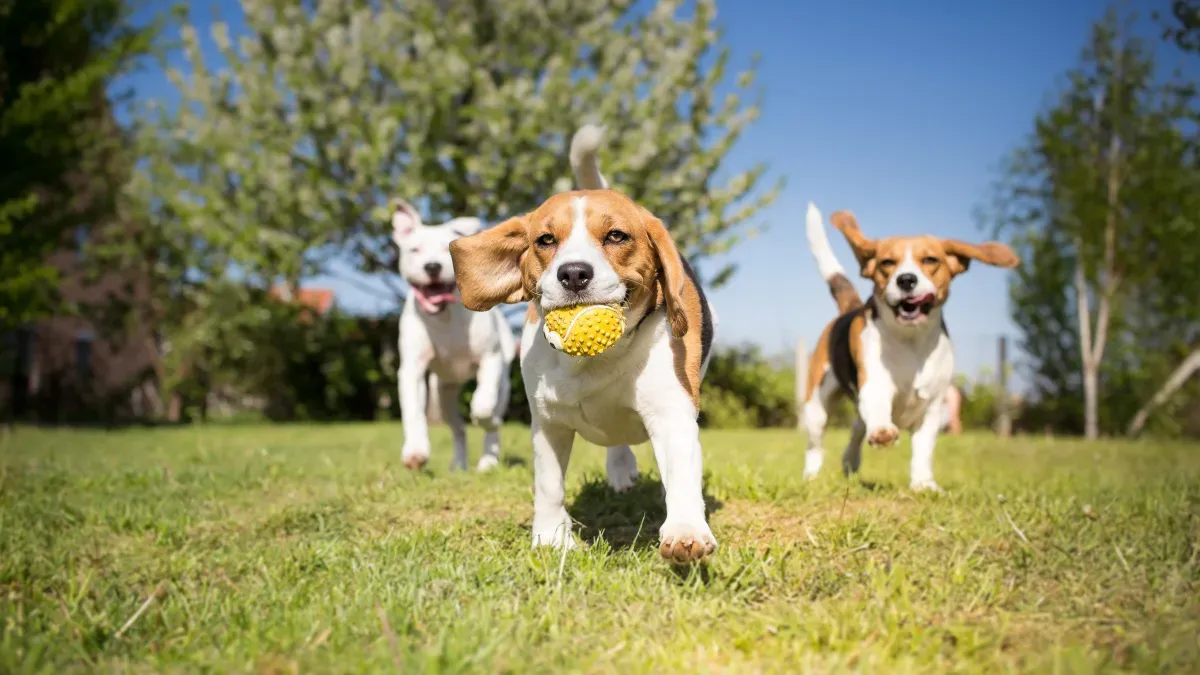
The goal of good dog socialization training is to ensure that the dog is at ease in and responsive to the various circumstances he might encounter during his daily life. A dog could be exposed to new people, other pets, traffic, new surfaces, sounds and busy public places. Socialization can be a useful way to gradually expose dogs to these experiences and teach them to be attentive and appropriately respond.
Start With Every Day Experiences
Socialization doesn’t need to be done in a setting of many dogs straight away. Learning opportunities can be provided through our everyday experiences if presented at the appropriate time, place, and level. A relaxed walk, a different walk, being able to have a friendly interaction with another person or listening to strange noises while being at a comfortable distance can all be learning experiences.
The intent is to make it an experience that can be managed. Just watch how your dog moves and tweak things as you go. That way, learning new stuff feels easy instead of scary for them every single time.
Build Positive Associations
Mix new stuff with things your dog already likes to build big trust. Fun spots get way better with snacks, happy voices, toys, quick games, and love.
For instance, if the dog is with an owner, they could reward him for seeing another dog from an appropriate distance without showing aggression. With time, the dog can come to understand that the sight of another animal does not always mean that it must rush towards that animal. Small and successful experiences can be the base for further learning.
Choose Suitable Classes
If you choose to enroll your dog in a dog socialization classes, you’ll be able to learn how to manage your dog around controlled distractions. The age, personality, confidence and experience level of dogs participating should be taken into account for an appropriate class.
Owners should consider the manner in which interactions occur, rather than thinking more is better. Dogs need to learn social skills from observing others, walking close to others, concentrating on their owners, and keeping their behavior calm, all without having to be in direct contact with them.
Teach Calm Responses
Socialization is not just about letting dogs say hello to all. In the real world, dogs should learn that they can see people and animals and not necessarily go up to them.
Owners can practice some simple behaviors that include looking to the handler, calm waiting, walking past a distraction or settling nearby. The skills can be helpful when walking, visiting outdoors and on other occasions when a person needs to be attentive.
Practice At Different Locations
If a dog is comfortable when he is at home, he might require more work at an unfamiliar place. The new environment can provide new sounds, fragrances, textures, movements and people.
Owners can progressively increase their dog’s experiences by first going to quiet places and then to more moderately busy places. The speed should be dependent upon the dog’s response. You don’t have to try and make all the rides difficult.
Include The Whole Household
Where more than one person is interacting with the dog, there is an easier way to maintain a dog’s socialization when there is a common set of expectations. When the dog sees another animal, a visitor or something she is not familiar with, her family members can agree beforehand on what to do.
Handled consistently, these situations can be more predictable. It also assists owners to identify those things that will help to maintain the dog’s attention and comfort throughout a variety of activities.
Conclusion
Socialization is a process that takes place throughout a dog’s life. As dogs grow, they will keep coming across new situations, animals, people and places. If you have regular, manageable experiences, this helps to keep good habits in place, and it can help remind owners to continually observe their dog’s individual needs. If you are an owner who would like some organization in developing these skills, caninemoxy.com can be visited for the assistance of a professional trainer. Owners can make an effective contribution to their dog’s socialization and use it to help the dog learn how to function in the world around it in a thoughtful manner.